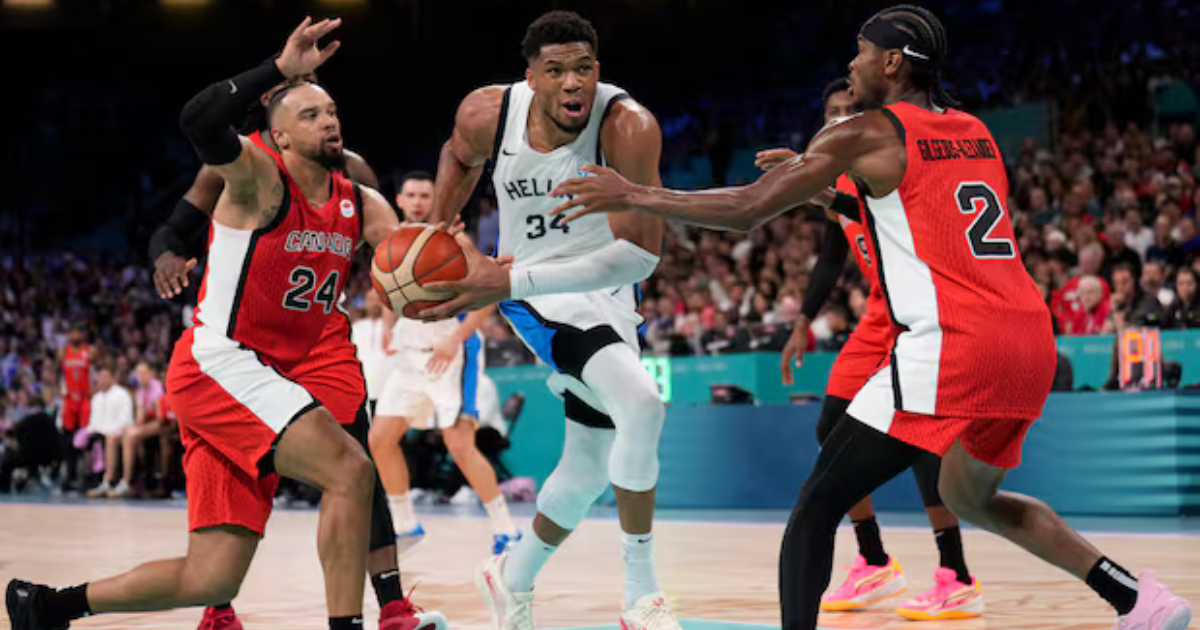
Basketball may be a global game, but not all basketball is played the same way. Fans who watch both the NBA and international competitions — like the FIBA World Cup or the Olympic Games — often notice major differences in gameplay, rules, and style.
While both share the same essence — five players, one ball, and a 10-foot hoop — the contrasts between NBA basketball and international basketball shape how teams play, how games flow, and even how stars perform on the world stage.
Let’s break down the key differences in rules, style, and strategy that set international basketball apart from the NBA.
1. Rulebook Differences: FIBA vs. NBA
The NBA follows its own set of rules, while most international competitions are governed by FIBA (the International Basketball Federation). Though the fundamentals are the same, the details make a huge impact.
Court Size and Game Length
-
Court Dimensions: FIBA courts are slightly smaller (28m x 15m) than NBA courts (28.65m x 15.24m). That may seem minor, but it creates a more compact, physical game.
-
Game Duration: FIBA games are 40 minutes (four 10-minute quarters), while NBA games run 48 minutes (four 12-minute quarters). Less time means every possession counts more in international play.
Three-Point Line
-
The three-point arc is closer in FIBA (6.75m or about 22.1 feet) compared to the NBA’s 23.75 feet at the top of the arc. This encourages more outside shooting in international games and gives big men a chance to step out and stretch the floor.
Goaltending and Defence
-
Under FIBA rules, once the ball touches the rim, defenders can legally knock it away — a move called rim interference in the NBA. This leads to more contested rebounds and tip-ins.
-
FIBA also allows zone defences, whereas the NBA only relaxed its illegal defence rules in 2001. As a result, international teams often play compact zones to protect the paint and force outside shots.
Timeouts and Fouls
-
In FIBA, coaches can only call timeouts during stoppages — not while the ball is live.
-
Players foul out after five fouls internationally, compared to six in the NBA. With shorter games and stricter foul limits, international players must defend smarter and avoid early mistakes.
2. Style of Play: Team vs. Individual
The NBA is known for its star-driven, highlight-heavy style. Superstars like LeBron James, Luka Dončić, or Giannis Antetokounmpo often control possessions, using their athleticism and isolation skills to create shots.
International basketball, on the other hand, is built around team systems, ball movement, and fundamentals. Since national teams don’t have long seasons together, coaches focus on structure and chemistry rather than complex playbooks.
NBA Style:
-
Emphasis on spacing and one-on-one matchups.
-
Faster pace and higher scoring.
-
Greater reliance on athleticism and individual creativity.
International Style:
-
More set plays, motion offense, and off-ball screens.
-
Physical, half-court defence.
-
Team-oriented passing and shooting.
This difference explains why some NBA superstars take time to adjust during FIBA tournaments — the spacing is tighter, the defences are smarter, and referees call the game differently.
3. Officiating and Physicality
FIBA games are often more physical than NBA games. Referees allow more contact on drives and screens, but they’re also stricter about travelling and offensive fouls.
In contrast, NBA refs tend to favour offensive flow and allow more leniency on moves like step-backs or gathers. The difference can frustrate NBA players at first, as they’re used to a freer offensive rhythm.
4. Strategy and Team Dynamics
Because international rosters are smaller and talent is more evenly spread, success often comes from execution and discipline rather than raw talent.
Teams like Spain, Serbia, and France have shown that structured, unselfish basketball can beat more athletic teams. Ball movement, off-ball cuts, and tactical precision take priority over isolation plays.
NBA basketball, meanwhile, thrives on star power and open-court excitement — designed as much for entertainment as for efficiency.
5. The Global Influence
Interestingly, the gap between the NBA and international styles is shrinking. Many NBA teams now incorporate European-style ball movement and spacing. Conversely, international players entering the NBA bring refined skills and tactical awareness that raise the league’s overall IQ.
Today’s NBA is full of international stars — Jokic, Doncic, Antetokounmpo, Wembanyama — whose global training backgrounds blend the best of both worlds: NBA athleticism and FIBA fundamentals.
Final Thoughts
The NBA and international basketball offer two sides of the same coin — one defined by individual brilliance, the other by collective precision.
Where the NBA showcases athleticism, speed, and spectacle, international basketball highlights discipline, teamwork, and tactical depth. Both demand intelligence, effort, and skill — and both make the game beautiful in their own way.
In the end, the biggest difference isn’t in the rules — it’s in the rhythm. The NBA dances to the beat of its stars, while FIBA basketball moves to the harmony of the team.